


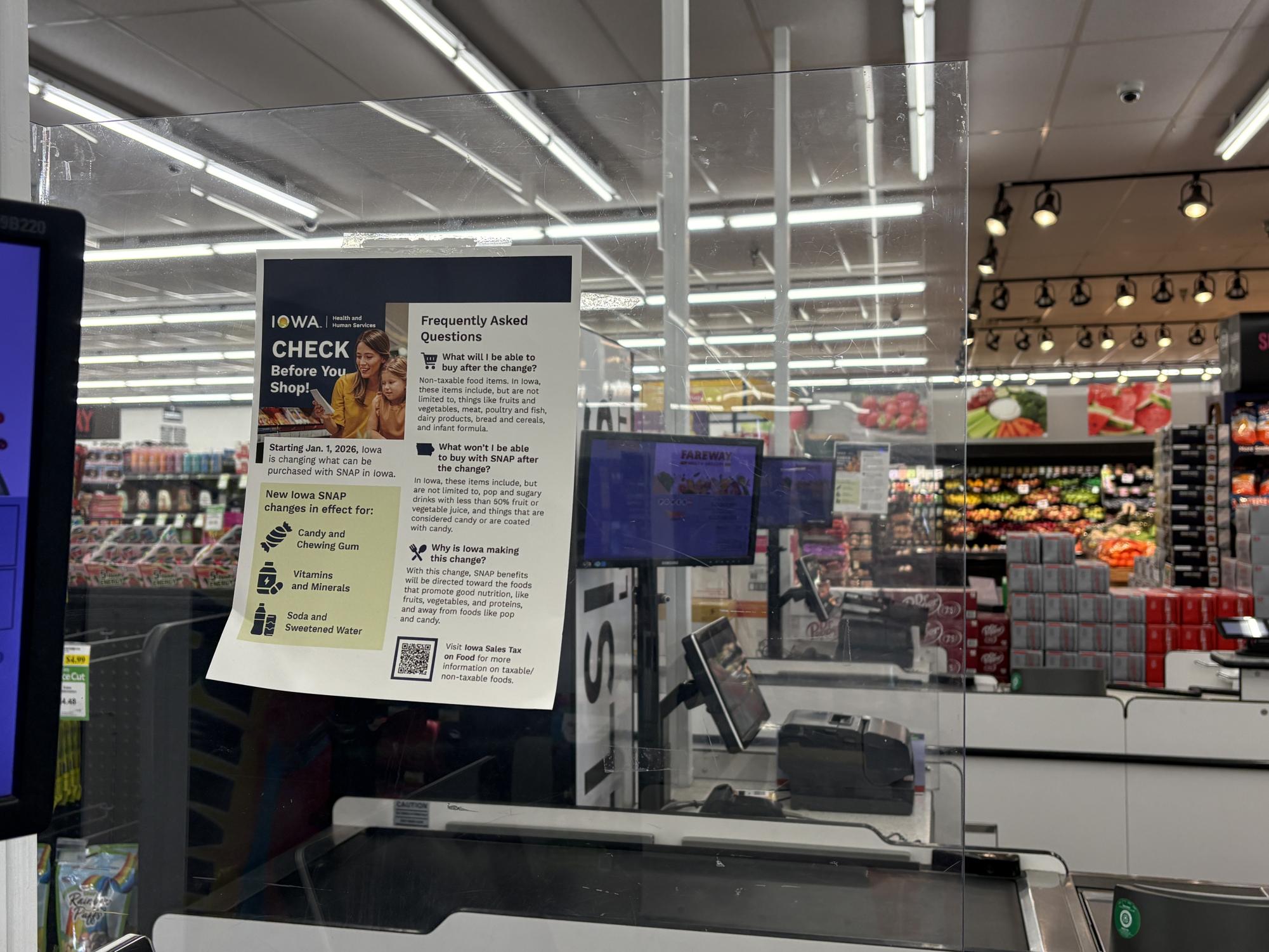
You may have heard SNAP in the news late last year, with a loss of benefits being a possible ramification of the government shutdown. Now, SNAP is brought back into the spotlight in Iowa, with a law which took effect January first changing benefits.
This law narrows the foods that can be purchased with SNAP benefits, with the change being that now, only non-taxable food items can be purchased with benefits. In Iowa, most food and food ingredients are exempt from sales tax, including products such as baking supplies, proteins, vegetables, fruits, frozen food, and some snack items.
SNAP, or Supplemental Nutrition Assistance Program is a program provided by the State of Iowa to residents who are below a certain income threshold, and the goal of the program is to provide food of nutritional value to people who cannot always afford it.
Some common food-adjacent items were excluded in old SNAP guidelines, such as alcohol and tobacco, vitamins, medicine, hot foods or food “made for consumption on-premise” and non-food items.
The new law will keep the exclusions of the old SNAP guidelines, as well as excluding food items that are taxable.
Iowa Health and Human Services addresses the new law, stating that products no longer covered by SNAP include “pop and sugary drinks with less than 50% fruit or vegetable juice, and things that are considered candy or are coated with candy.”
All stores that accept SNAP were required to make this change by January 1st, including our local Fareway.
Samantha Holland, a checker at Fareway, was informed by her managers about the change to the SNAP program. “We had a meeting,” She said. “It was about how not all the items that were covered by SNAP benefits previously were going to be now, and mostly sugary items like some juices and candies. ”
While she was instructed to tell customers that it wasn’t Fareway’s decision to make the change, but a state law, Iowa has reasoning behind it. According to Iowa Health and Human Services, the goal is to urge people to use SNAP benefits on more nutritional food, they listed fruits, vegetables and proteins as foods that will still be available for purchase with SNAP.
“I think that nutrition being encouraged is good,” Holland said. “And I do think that if you’re using SNAP benefits, you should try to buy foods that are high in nutritional value, with energy that will last longer.”


