


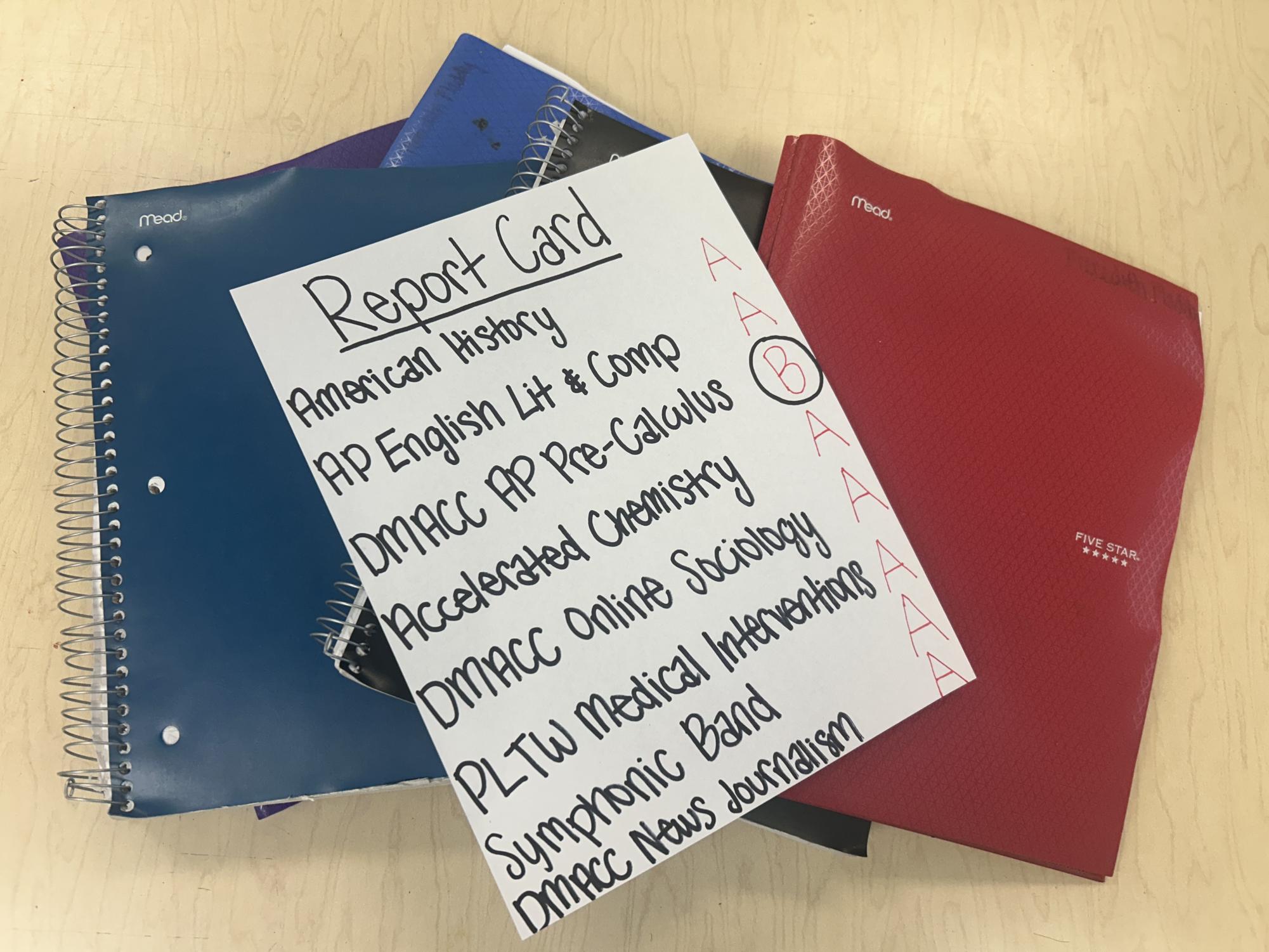
This is a question that, for me, a high-achieving, straight-A student, initially seems like has an obvious answer. Of course getting straight-A’s is the goal. After further pondering this, however, I’ve realized that it’s a very complex idea that requires a lot of thought to really wrap my mind around.
As many people realize, earning straight-A’s, and even just good grades in general, has many benefits. For starters, pushing to reach that impressive goal gives students grit and teaches them how to persevere through stressful times. It can help students become hardworking, a characteristic that will give them high ceilings for their future and set them up for success in various aspects of their lives. Additionally, academically high-performing students can have more opportunities to attend prestigious colleges; this, in turn, will allow them to equip themselves to someday work difficult, high-demanding occupations, which will positively affect the workforce as a whole.
For the many advantages there are to earning straight-A’s, there are just as many drawbacks. As a high school student currently taking three AP classes along with two DMACC courses, I can testify to how easy it is to fall into the trap of believing that your worth comes from the grades that you earn. If you aren’t careful, it can be almost impossible to stop yourself from believing the lie that your value comes from your achievements, which can come in the form of doing well in school. I’ve seen firsthand, in my own life as well as in my peers’ lives, the damage that striving to maintain perfect grades can do. It can drain you emotionally, mentally, and even physically, as kids can sometimes neglect getting adequate sleep and eating nutritious meals while they’re on the “daily grind” that has become part of being a high school student.
Another important component of this issue that should be brought to light is that academic excellence does not guarantee career excellence. While cramming for tests and memorizing plentiful amounts of information can help you get that good grade you want so badly, it probably won’t be what will get you hired at your dream job someday and set you apart from your competitors. Simply being a straight-A student does not mean that you possess the skills that are required to thrive in a job here in the twenty-first century. If you can’t demonstrate strong communication, problem-solving skills, or the ability to work with others, you won’t stand a chance in today’s workforce.
This all points to my belief that there is so much more to a student’s education than just obtaining A’s in all their classes. While it is beneficial to be able to retain challenging information and do well on difficult, high-pressure exams, it’s not all that matters. Along with that, students need to be able to learn how to better themselves in areas that will genuinely help them in “the real world.” After all, the point of schooling is to prepare students for their future careers, and earning straight-A’s alone is not sufficient in doing that.
So, while I will still continue to push myself and lean into the taxing, demanding situations that make up my life as a high school student, I know that my getting straight-A’s is not what defines me. While I haven’t received an inferior grade yet, I know that when it does happen (and it will), I will be ready. Ready to pick myself up. Ready to remind myself that it’s okay. Ready to cling to the truth that getting straight-A’s is not the “end all, be all,” and that I can learn crucial lessons through my shortcomings.


