

This year ADM high school has gone through many changes with our policies. We have cracked down on phone policies, we have lost the ability to have non academic brain breaks, and food in the classrooms.
From a teacher’s perspective, Tyler Kubiak feels “non academic brain breaks, I think they are beneficial, but in small amounts. Everyday at the same time is not the right approach but after a long lecture or activity, it could be beneficial for young minds. Especially because y’all have so many classes to think about.” Kubiak thought if teachers were taking advantage of brain breaks, then it was needed. But for the ones doing it sparingly, as stated above, it’s not needed.
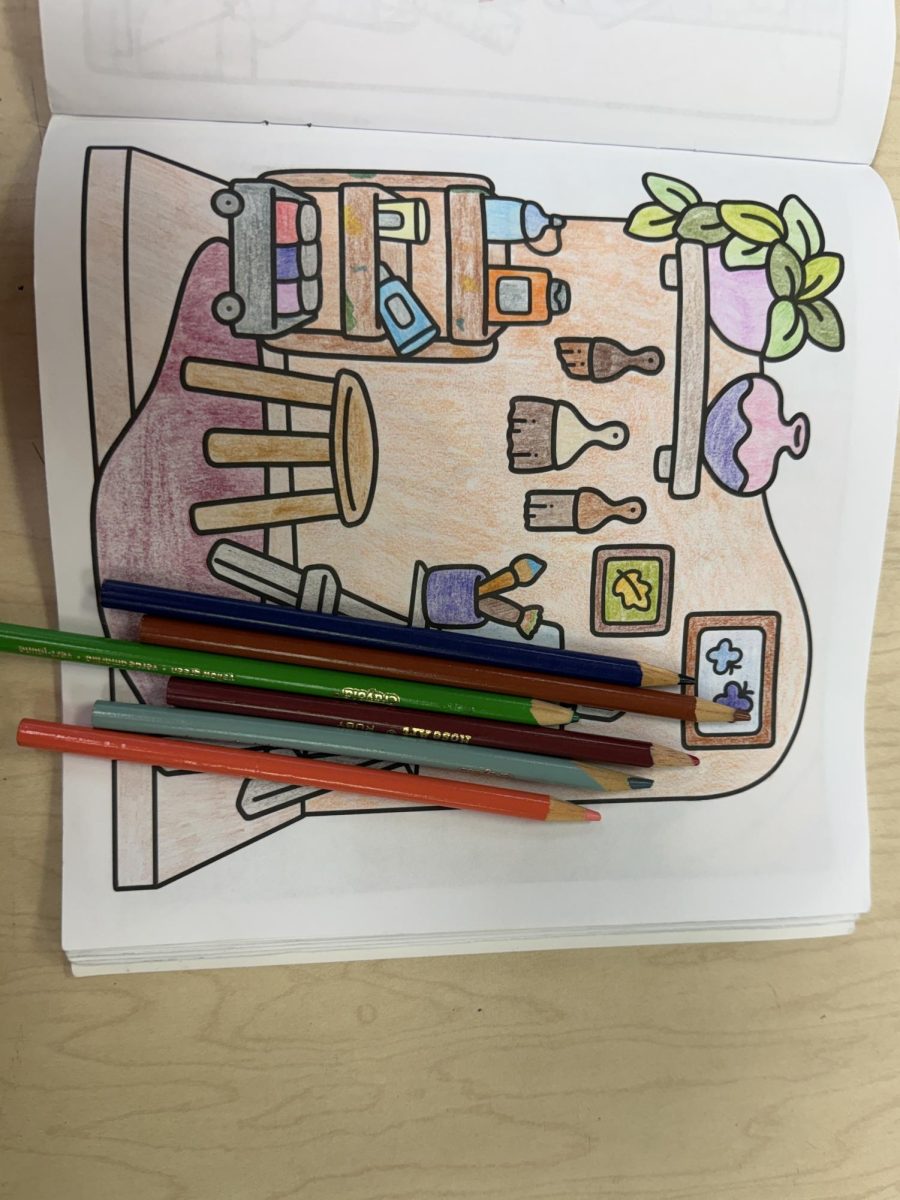
Brain breaks are perfectly fine. Work gets stressful and hard. As long as these brain breaks aren’t taking away from my learning I don’t see a problem in coloring for a couple minutes.
Kubiak talked about his ideas with food and phones not only in his classroom but in the school entirely. “Phones, yes. You do not need your phones at all during the day. No excuse will ever make sense as to why you would need it. Food in class, I mean as long as it’s not a full meal, I don’t see the issue at all.”
I personally agree with his take. I feel more productive without my phone out of sight or out of mind. I shouldn’t need to see the newest video or the snapchat I was sent. I like not having my phone control me in school. I am a student first and a phone addict second. A snack, why not. At school the day is long. Sometimes I need a little energy boost with a granola bar.
ADM Principal Lee Griebel makes choices for ADM to try and better it. These policies are part of his doing.
With cell phones most adults feel the same way. Griebel’s answer was on trend with other responses. “Cell phones were one of the biggest distractions in classrooms. While we recognize that phones are a part of life and can be useful tools, they often pull students away from instruction, relationships, and engagement.”
At home when I lose my phone it’s a form of punishment. At school it’s used as a helping hand and a tool. Griebel said “Our approach is not about punishment—it’s about helping students stay present, attentive, and ready to learn. Limiting phone use during the school day supports stronger academic outcomes and healthier social interactions.”
Another policy being questioned was food. Griebel’s answer was surprising considering the policy being that food should not be eaten in classrooms during class. He said “Generally, I believe food in class should be limited. Small snacks can be allowed when appropriate, but full meals, messy foods, or anything that causes disruptions should stay out of the classroom.” Griebel and Kubiak both felt the same. Snacks are perfectly fine. The students abusing the ability to have food by bringing full sharable meals are a part of the reason that snacks have been limited in the learning environment.
“We want students to be comfortable, but we also need to maintain a clean, focused learning environment for everyone. Teachers can use their discretion, but the priority is always keeping classrooms distraction-free.” -Griebel.
The brain breaks at ADM have changed. Griebel personally felt he made the best decision for us as students. He wrote “Brain breaks can be very beneficial when used intentionally. Students need moments to reset, refocus, and manage stress—especially during longer class periods or high-intensity learning. Short, structured brain breaks can improve attention, behavior, and overall learning.”
“The key is balance: they should support learning, not replace it. So our brain breaks should not be non-academic, but support the current learning students are doing in the classroom,” said Griebel
Overall he believes that these changes help us. Griebel said “Yes, I do believe the new ADM policies were necessary.” The new policies consist of breaks, phones, and food. He feels that “Our goal is always to create a learning environment where students can be successful, feel supported, and stay focused. Over time, we saw patterns that were getting in the way of that—especially around distractions, consistency, and safety.”
After research, my overall opinion is: phones, no. As students we don’t need them in most classes. We should be able to set our phone down and not crave our screens. Brain breaks: classes are hard, school is hard, the days are long. I feel that a 5 minute coloring break is beneficial to my mental health in school. Food in classes: Griebel and Kubiak are right. A snack is ok, a meal is not. A little something to get you by is OK but yes, we don’t need meals. We have a lunch block, we are given time by our school to eat lunch in the building or leave and eat our own lunch. We are given freedom to do whatever we want during our lunch.


